Automated Wood Mold Prevention Production Line Retrofit: Framework for Calculating Payback Period
Upgrade from traditional soaking pools to an automated wood anti-mold machine. How long until you recover your investment? This guide provides a quantifiable framework comparing equipment costs, operational savings, and capacity gains to help you make data-driven decisions for production line upgrades.
Upgrading from traditional soaking pools to fully automated mold prevention lines raises one key question for business owners: How quickly will this investment pay off? The payback period depends on the combined impact of equipment costs, operational cost changes, and production capacity gains. Based on years of serving wood product manufacturers, Mudun has developed a quantifiable calculation framework to support your line modernization decisions.
Cost breakdown of traditional immersion pool processes
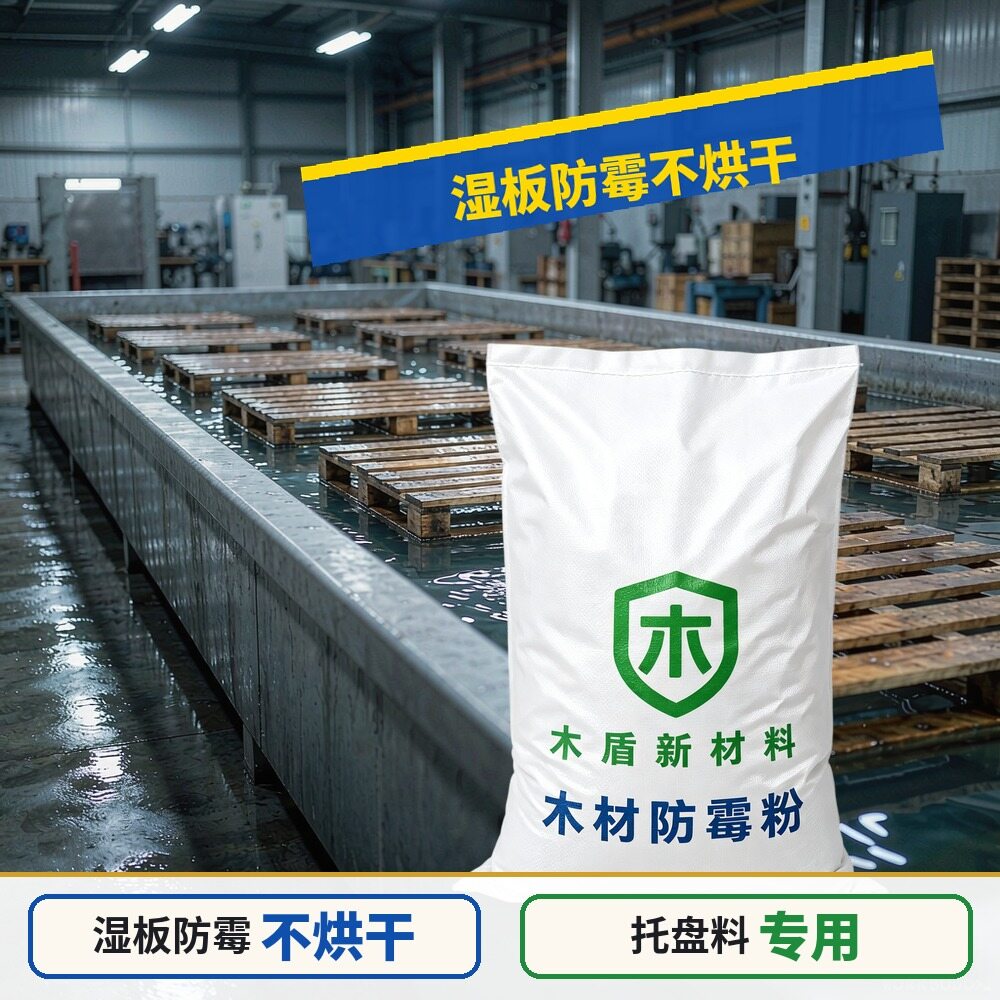
Building a self-made cement soaking pool costs between 5000 and 10000 yuan. While the upfront investment seems low, hidden operational expenses are what truly erode profits.
The cement pool process relies on a forklift to load timber into the pool batch by batch. Throughout the entire soaking cycle, the forklift is tied up and can only wait in place. Based on daily processing of 40 to 60 cubic meters of timber, one forklift with an operator costs approximately 400 to 600 yuan per day. Soaking time depends on chemical concentration, wood moisture content, and ambient temperature, typically requiring 3 to 8 hours. During this period, the forklift and worker remain idle or operate inefficiently. Labor and equipment depreciation costs amount to about 8 to 12 yuan per ton of timber. This expense is often buried under "general manufacturing overhead" in financial records, making it difficult to identify separately.
Efficiency Parameters of the Fully Automatic Wood Anti-Mold Machine
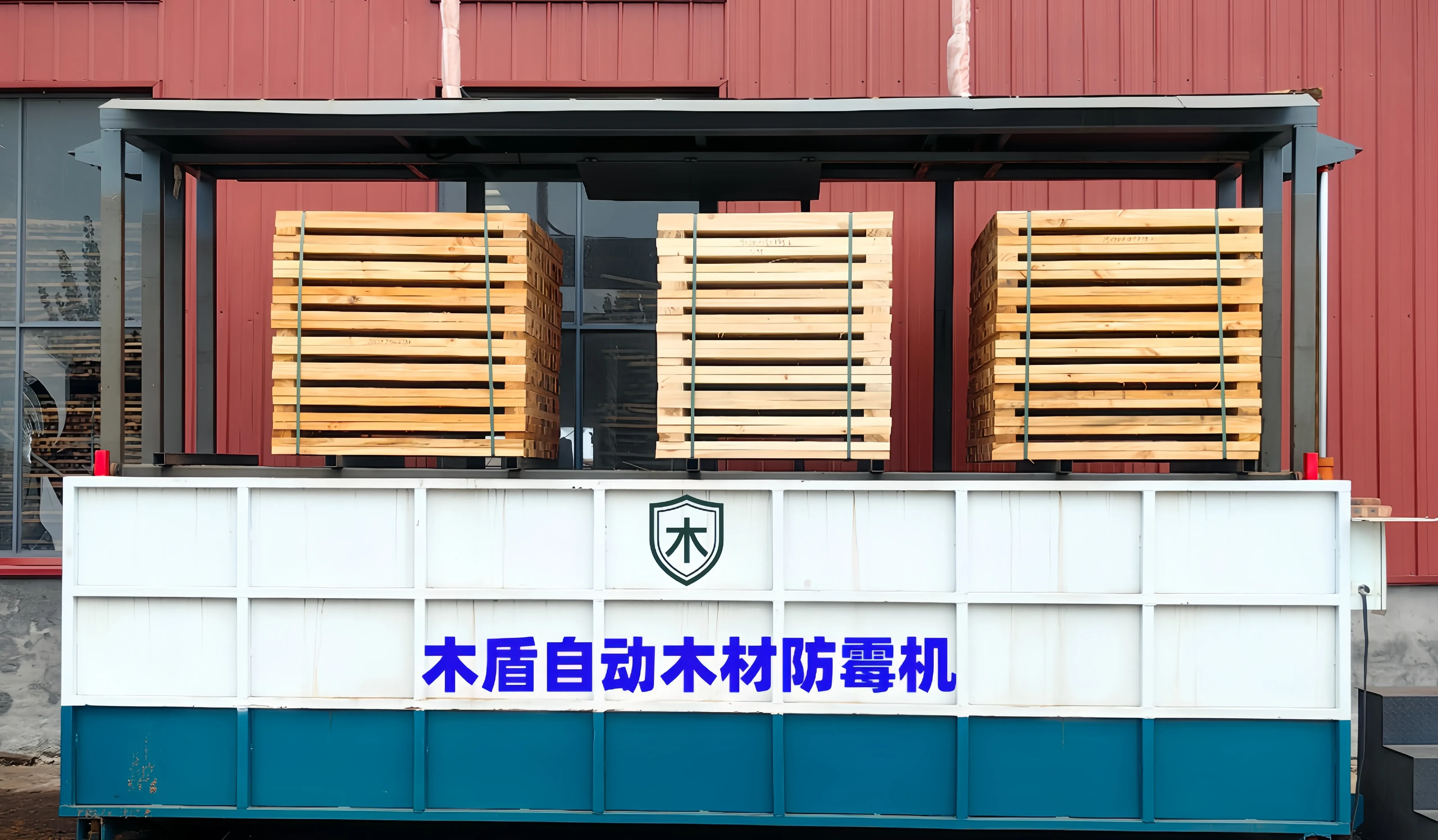
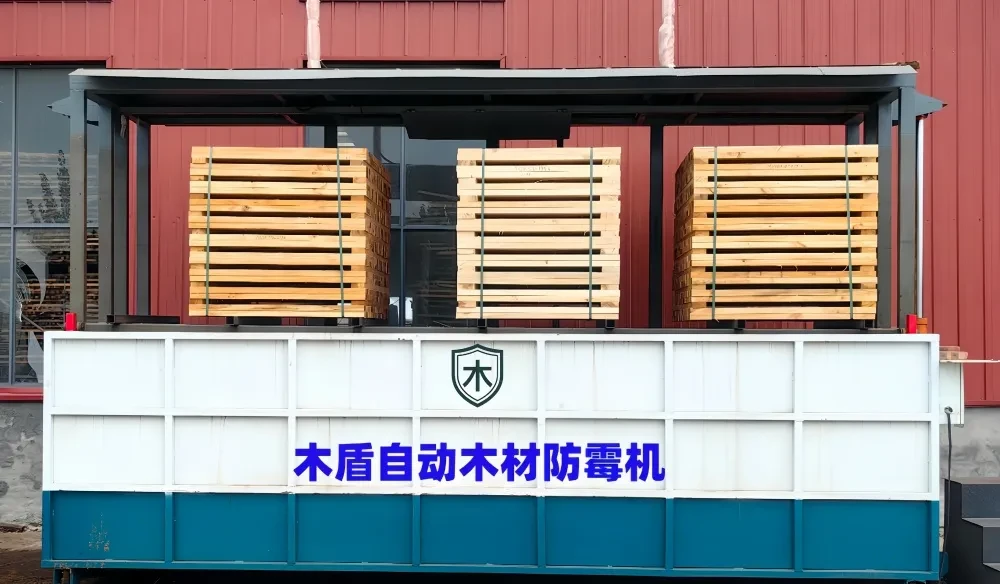
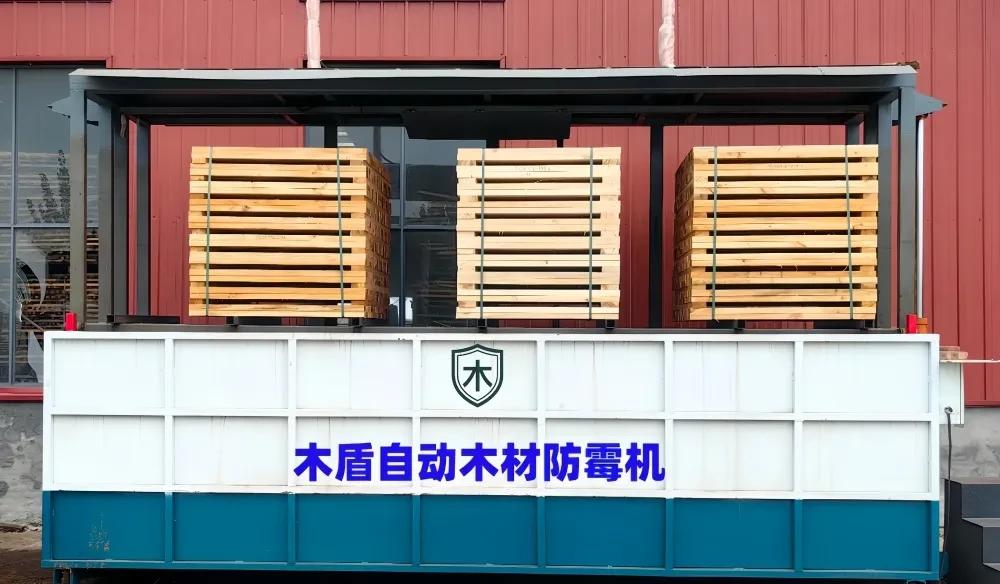
This fully automated wood anti-mold machine processes 80 cubic meters of wood per day. A PLC touchscreen controls the entire workflow—from feeding, soaking, and draining to discharge—without requiring manual intervention or forklifts waiting at the tank. Equipment procurement costs range from 1 to 2.5 ten thousand yuan, representing an incremental investment of only 10,000–20,000 yuan compared to constructing a concrete pool (costing 5000 to 10000 yuan).
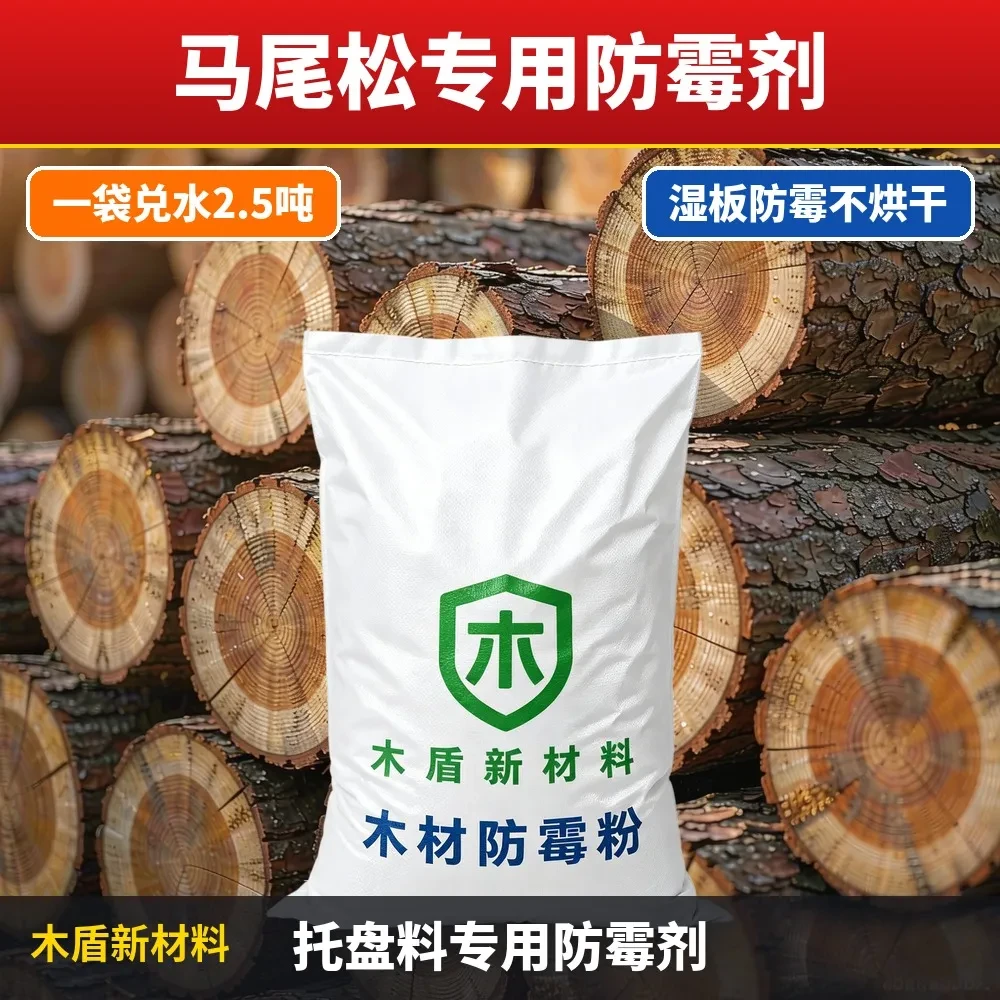
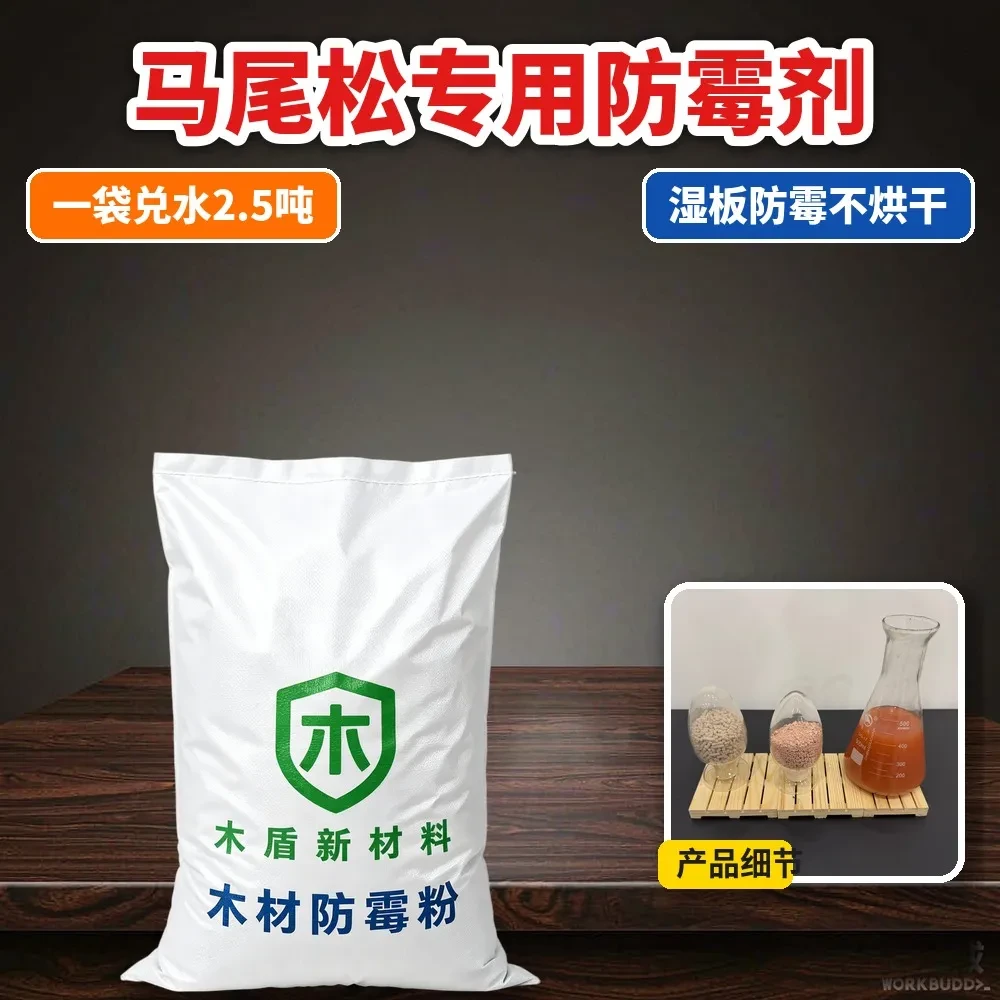
Regarding chemical costs, the single-use antifungal treatment with fully automated equipment ranges from 5 to 6 yuan. Precise dosing via metering pumps ensures uniform penetration, outperforming manual soaking. Using Mudun antifungal agents as an example, treated wood shows more stable antifungal cycles compared to manual operations, resulting in higher product pass rates and reduced rework.
Investment Payback Period Calculation Framework
The core formula for the payback period is: Incremental Investment ÷ Daily Net Income Increase = Payback Days.
Incremental investment is the cost difference between an automated wood anti-mold machine and building a cement pool. Machine purchase price: 1 to 2.5 ten thousand yuan; cement pool construction cost: 5000 to 10000 yuan. The incremental investment is only 5000 to 15000 yuan—far below most business owners' expectations.
The daily net profit increase consists of two components. First, cost savings from eliminating forklift and labor expenses: fully automated equipment removes forklift wait times, directly saving 400 to 600 yuan per day—the combined daily cost of one forklift and its operator. Second, marginal gains from increased capacity: daily throughput rises from 40 to 60 cubic meters to 80 cubic meters. The additional 20 to 40 cubic meters generate extra daily revenue of 300 to 1000 yuan, calculated at a processing profit of 15 to 25 yuan per cubic meter. Regarding chemical costs, the fully automated system incurs only 5 to 6 yuan per treatment cycle. For a daily throughput of 80 cubic meters, total daily chemical costs amount to approximately 400 to 480 yuan—comparable to traditional methods and not representing a significant incremental expense.
The combined incremental daily net profit is approximately between 700 and 1600 yuan. Based on an incremental investment of 1.5 ten thousand yuan and a daily net profit of 1000 yuan, the static payback period is around 15 days. Even under the most conservative parameters (incremental investment of 1.5 ten thousand yuan and daily net profit of 700 yuan), the payback period will not exceed 22 days.
Hidden Benefits and Risk Variables
Beyond the core calculation framework, several hidden benefits warrant consideration. The fully automated PLC system logs treatment parameters for each wood batch (soaking time, chemical concentration, temperature), providing data to support quality traceability and process optimization. This is especially critical for export-oriented companies, as PPWR compliance audits in Southeast Asia and EU REACH regulations both require verifiable treatment records.
Regarding risk variables, the equipment payback period is directly tied to the plant's actual capacity utilization. If daily throughput remains below 60 cubic meters for an extended period, the payback period will extend accordingly. Additionally, supplier stability, equipment maintenance costs, and spare parts lead times should be factored into the financial model.
The key to estimation is quantifying variables.
The payback period isn't a math problem with a single correct answer; it's a form you fill out based on your company's specific parameters. The incremental investment is fixed (between 1 and 2.5 thousand yuan, minus cement pool costs). Changes in operating costs can be estimated using existing forklift and labor data. Revenue gains from increased capacity depend on order saturation, while hidden benefits tie directly to your compliance requirements and quality management standards.
For Mu Dun mold inhibitor, we recommend that companies first compile a complete cost breakdown of their current immersion pool process. Next, compare the parameter differences with fully automated equipment item by item. Finally, substitute these differences into the payback period formula. The precision of your quantification determines the reliability of your decision.
Read More
Learn more about wood mold prevention, anti-corrosion, and blue stain removal.
Basics of Wood Mold Prevention
Wood mold is caused by the proliferation of mold spores under favorable conditions. Mold growth requires three essential elements: nutrients, moisture, and suitable temperatures. Wood contains abundant cellulose, hemicellulose, and lignin, which serve as natural nutrient sources for mold. When wood moisture content exceeds 20%, mold spores germinate on the wood surface, forming visible mold spots.
Different tree species have varying mold risks. According toChinese Academy of ForestryResearch shows that poplar, with its low density and large pores, absorbs water quickly but dries out rapidly. Pine species (such as Masson pine and Chinese white pine) contain high levels of resin; the oily layer hinders moisture evaporation, causing internal areas to remain highly humid for extended periods and significantly increasing the risk of mold. Select an appropriateWood Mold InhibitorConsider wood species, moisture content, and application scenario.
Wood Mold Inhibitor Selection Guide
When selecting a wood mildewcide, evaluate it across three key dimensions. Mildew efficacy testing can follow:GB/T 18261-2013 "Test Method for Evaluating the Efficacy of Fungicides Against Wood Mold and Discoloration Fungi"method. When selecting a product, penetration is the primary factor; the fungicide must penetrate deep into the wood to establish lasting protection. Water-based fungicides offer strong penetration and are ideal for immersion treatment. Powdered types require thorough dissolution before use, while emulsion types are best suited for surface spraying.
Next is environmental compliance. Exported products must meet the environmental regulations of the destination country, such as the EU's PPWR and import standards in Southeast Asian countries. Finally, consider the protection cycle. Different usage scenarios require different levels of durability; indoor wood storage and outdoor wooden pallets need entirely different protection ratings. MuDun anti-mildew agent provides a complete MSDS and test reports to support...Southeast Asia Foreign Trade Exports。
Wood Mold Prevention Construction Methods
In actual production, wood anti-mold agents are primarily applied using the immersion method. After diluting the agent with water according to the specified ratio, fully immerse the wood in the solution for 3-5 minutes to ensure thorough penetration into the wood interior. Once removed, drain excess solution. The wet wood can proceed directly to subsequent processing steps without waiting to dry.
For large timber or assembled wooden pallets and boards, surface treatment can be applied via spraying or brushing. Wear protective gloves and a mask during application, and ensure the work area is well-ventilated. Water absorption rates and oil content vary by wood species (e.g., poplar, pine, slash pine, larch, mixed hardwood), so adjust the chemical concentration and soaking time accordingly. Learn moreTechnical Solution。
Wood Export Mold Prevention Requirements
Wood products for export typically require mold prevention treatment and supporting technical documentation. Common compliance documents include MSDS (Material Safety Data Sheet), test reports, and declarations of conformity. Mold prevention requirements vary by country and region; the Southeast Asian market primarily focuses on PPWR regulation compliance. Learn moreExport Service Details。
Mildewproofing effect reference for wood mold inhibitorGB/T 18261The testing methods described herein provide comprehensive export compliance documentation, meeting environmental regulations of major Southeast Asian wood-importing countries such as Malaysia, Vietnam, Thailand, and Indonesia. Exporters may refer toState Forestry and Grassland AdministrationPublish the wood export guide, prepare relevant documents in advance, and ensure smooth customs inspection.