Anti-mold treatment for wet plate pallets: Parameter differences between immersion and spray in no-dry scenarios
Common pallet materials such as pine, poplar, and mixed wood proceed directly to the next process after sawing, with no drying or air-drying stage. This paper compares the parameters of immersion versus spray methods in non-drying scenarios for wet boards and provides selection recommendations.
Common pallet materials such as pine, poplar, mixed wood, Chinese pine, and masson pine typically proceed directly from sawing or processing to the next stage without drying yards or kilns. This means mold prevention cannot be limited to a surface coating on dry boards; instead, it requires applying treatment agents into the outer layer of wet wood with high moisture content that is actively releasing water. The process selection must be re-evaluated based on this reality.
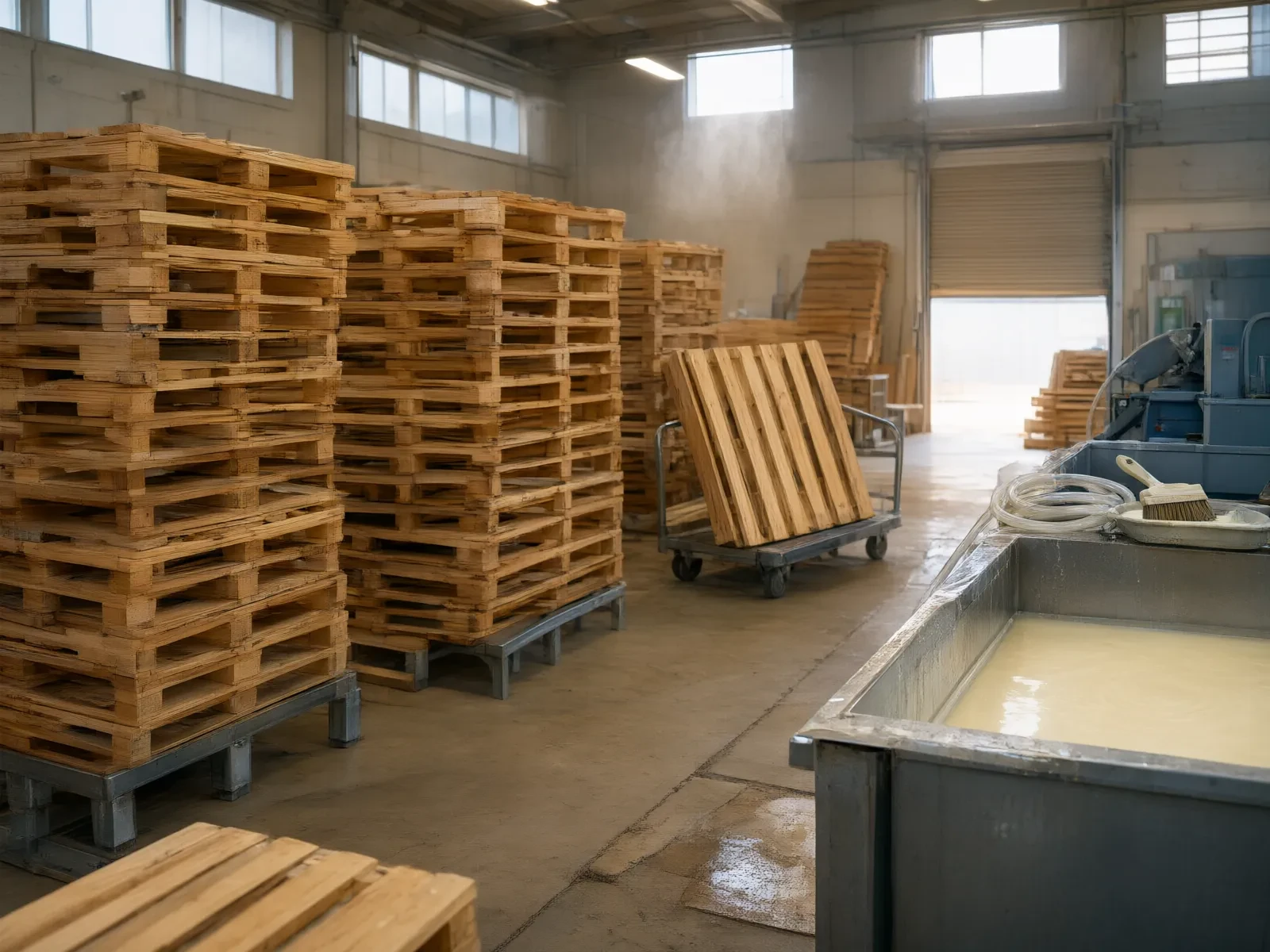
Mold growth window on wet boards
Typical moisture content in green boards ranges from 60% to 120%, exceeding the fiber saturation point with cell cavities filled with free water. In stacked conditions, insufficient airflow between board surfaces allows Penicillium, Trichoderma, Aspergillus, and blue-stain fungi to develop visible mycelium on the surface within 12–24 hours at temperatures of 25–30℃. Therefore, the essence of anti-mold treatment for green boards is competing with moisture: the biocide must establish an effective concentration on the surface before free water transports the spores there. Waiting until gray-green spots appear on the stacked surface before applying a mold remover means the mycelium has already penetrated the surface, doubling the remediation cost.
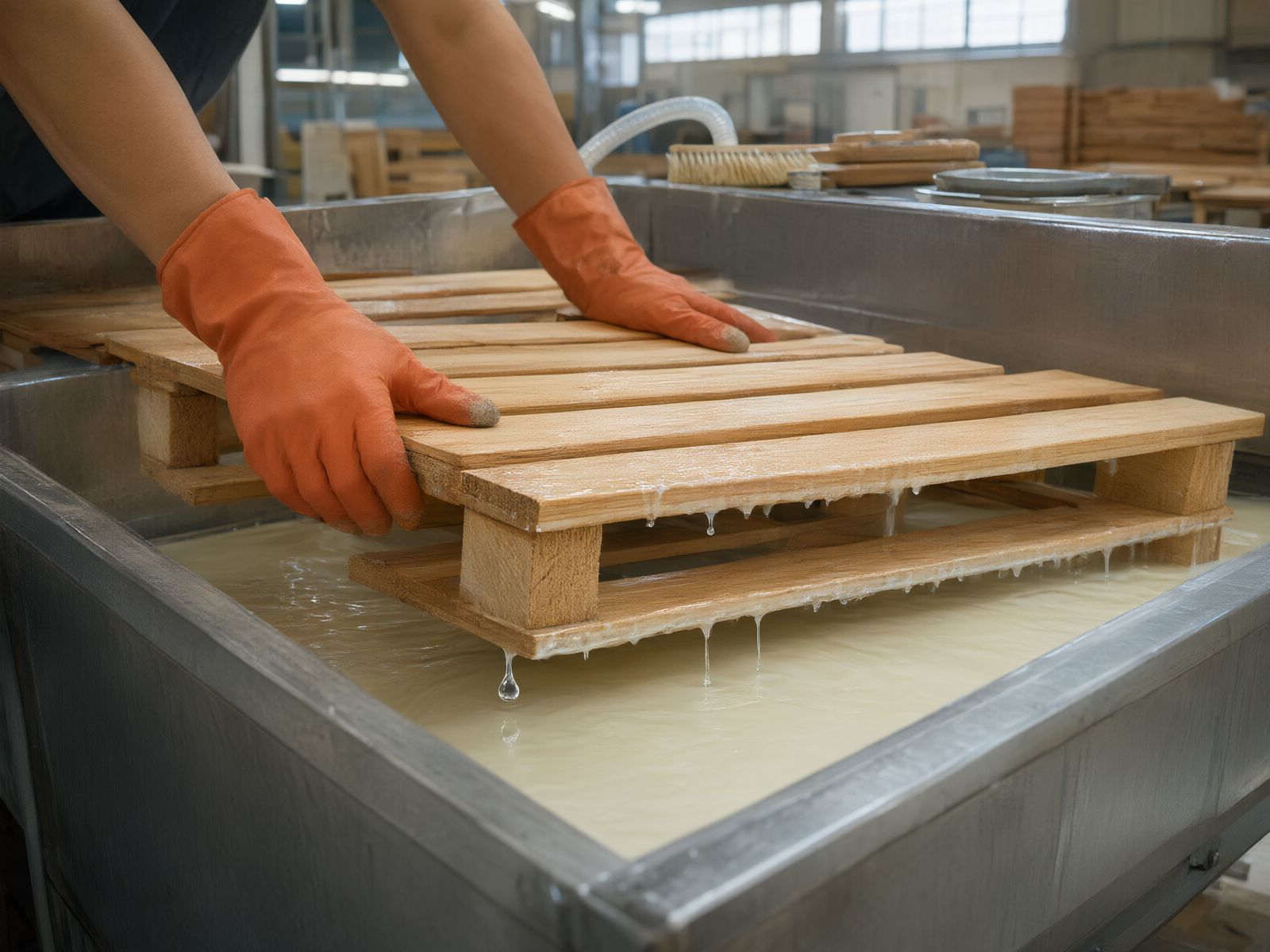
Soaking process: Diluted by free water; compensated via concentration and duration.
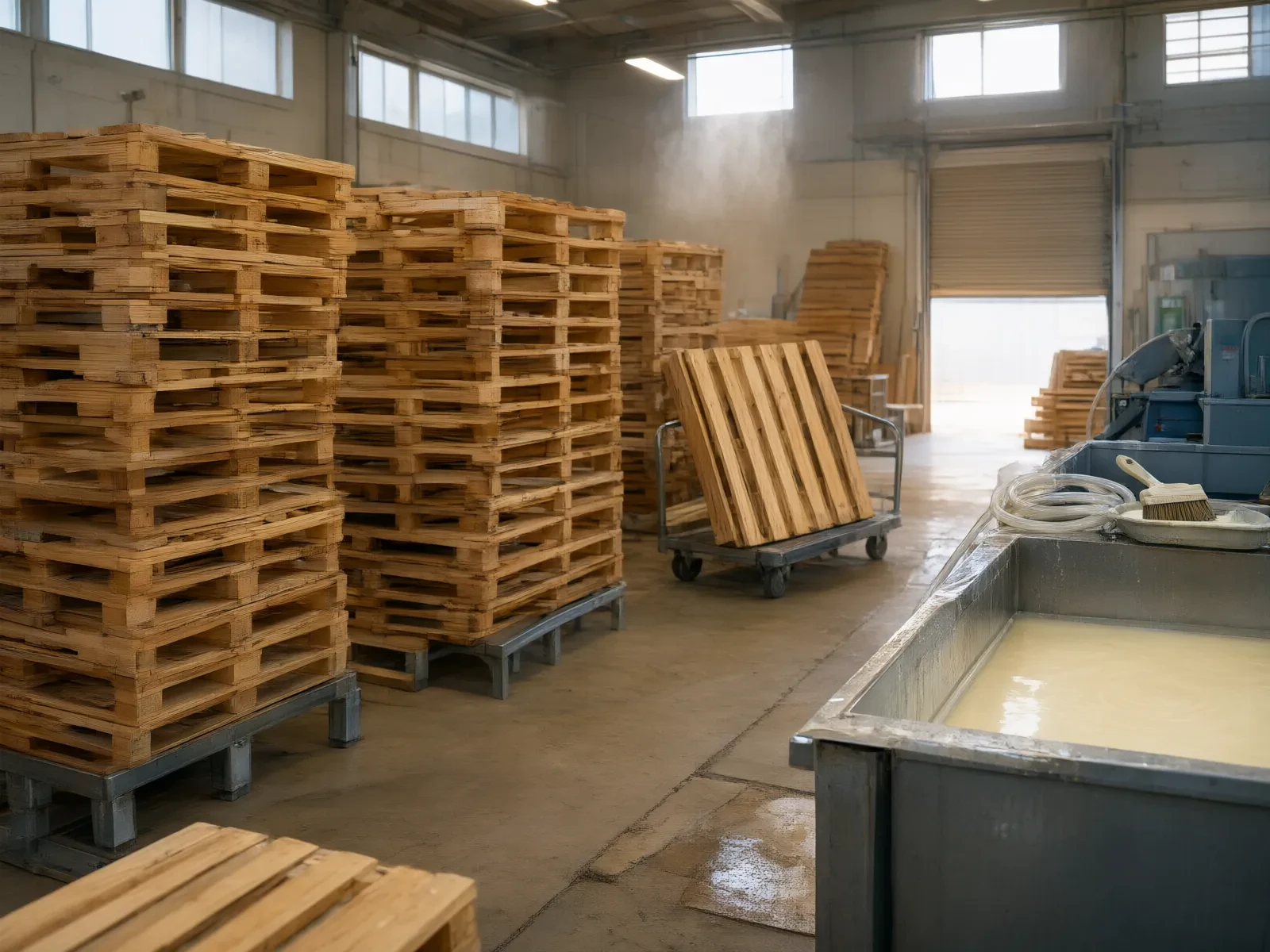
Immersion involves submerging the entire pallet into a prepared wood preservative solution. While concentration gradients drive the preservative inward, free water within the wet board simultaneously migrates outward, creating a counter-gradient that opposes inward movement. Consequently, the actual penetration depth is lower than in dry boards.
For wet plate scenarios, parameters should be shifted toward higher concentration: dilution ratio 20–30× (vs. the 30–50× commonly used for dry plates), immersion time 60–180 seconds (6–7 seconds longer than dry plates to account for leaching dilution), and liquid temperature maintained between room temperature and 35°C. Verified results show uniform coverage on both sides, with residual chemical concentration at the board's surface approximately 65%–80% of that from dry plate immersion; this single treatment level is sufficient to suppress mold germination.
Species with resin canals, such as pine and larch, exhibit significantly slower chemical diffusion on end grain than on side grain. In wet conditions, the end grain is the primary entry point for mold and blue stain. A dedicated end-grain dip of 30–60 seconds achieves an effective penetration depth of 3–5 mm—surpassing full-board soaking in efficiency. This step is the most frequently skipped during wet board treatment.
The bottleneck remains cycle time. Wet panels carry significant liquid when lifted from the tank, requiring 5–10 seconds for drainage. For a saw table producing one part every 5 seconds, an immersion tank solution is difficult to align with this pace.
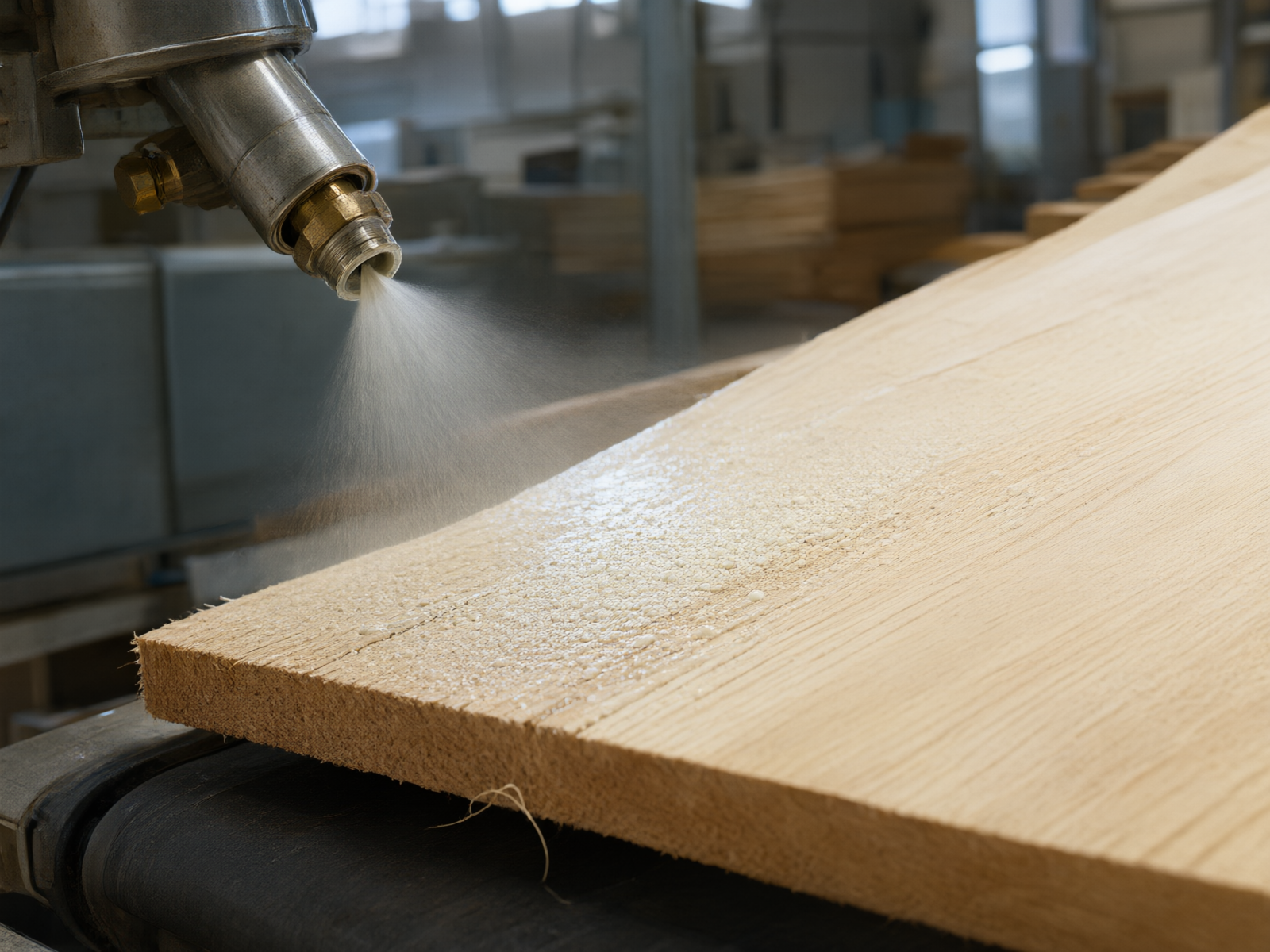
Spray Process: Water film impact and adhesion, broken down by pressure and formulation.
The misting system atomizes the anti-mold agent through nozzles and sprays it onto the board surface, relying on impact force and wetting action for adhesion. A visible free water film exists on the wet board surface; when conventional emulsifiable concentrate agents contact this film, they become diluted and are washed away with the water, resulting in insufficient agent residue.
Adjust parameters toward the high-concentration and high-pressure settings: dilute the eco-friendly wood anti-mildew emulsion to 8–15 times (higher than the standard 15–30 times used for dry boards), apply pressure at 0.4–0.6 MPa (one level above that for dry boards to break through the water film), set conveyor speed to 1–2 m/min to extend wet contact time, and ensure 6-sided coverage with at least 90% on each side. For formulation, finer particle-size emulsions with higher surface activity adhere better to wet boards than conventional oil-based agents, forming a continuous layer over the water film.
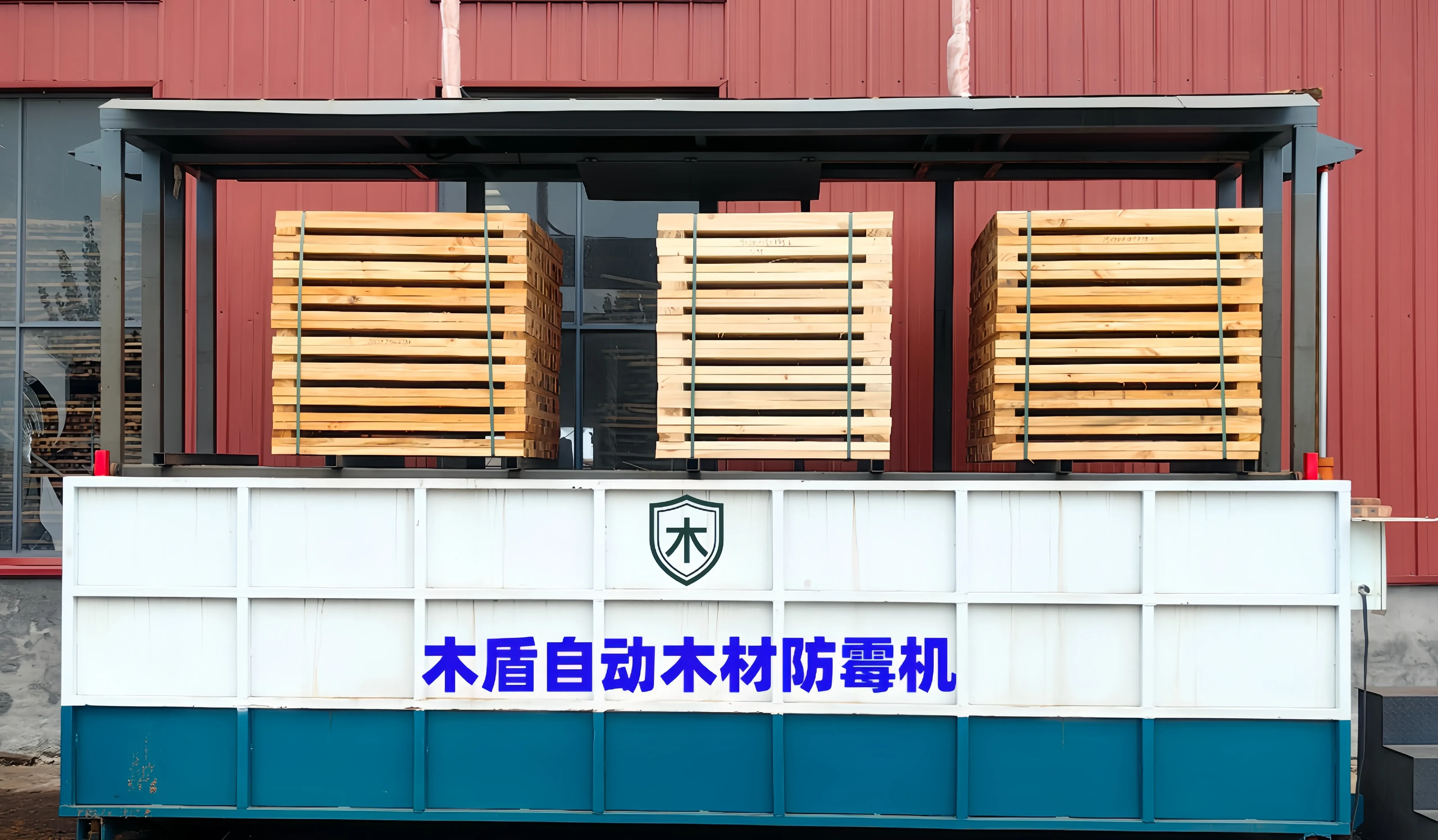
Wet plate spraying leaves 15%–25% less surface residue than dry plating; this difference can be offset by increasing the concentration. The key advantage is throughput: a fully automated wood anti-mold machine can connect directly to sawing and multi-blade saw exits, handling 3000–5000 units per day without bottlenecking.
The limitation lies in covering geometric blind spots: gaps between panels, surfaces within stacked piles, and inner layers of panel ends—areas where simple spraying cannot reach. For wet-panel scenarios that require no drying, a combined approach of "spraying after sawing + end-dip immersion at the front of stacking" is recommended to prevent mold from forming on the ends first.
Selection recommendations for non-drying scenarios
The single soaking route suits facilities with daily output under 3000 units and space for soaking tanks and drainage zones. For pine, poplar, or larch in medium dimensions (40–60 mm thick), six-sided integrated protection combined with end-grip dipping covers the mold risk window. Equipment investment is about one-third of a spray line.
A single spray line is suitable for scenarios with daily output exceeding 5000 units and uniform panel shapes. When wet contact time is insufficient, edges may lag; therefore, a dedicated edge treatment station must be added.
Combined process: top-spray + end-dip ensures stability in wet-plate, no-dry scenarios. Mu Dun New Materials' solution installs an automated anti-mold machine at the sawing station for six-sided online spraying with eco-friendly anti-mold emulsion, followed by high-concentration dip treatment on end faces before stacking. This two-step approach covers the mold-risk window of 24–48 hours with effective protection.
Apply parameters to your own data
Send three representative wet board samples (freshly cut from the line or randomly sampled from the stack, with moisture content readings) along with the production line layout. Our technical team will conduct tests on surface adhesion, chemical residue, and end-grain diffusion to provide quantitative recommendations for dilution ratio, pressure, line speed, and replenishment cycle. Mold prevention for palletized materials without drying is achieved not by empirical fine-tuning, but by accurately measuring parameters.
Read More
Learn more about wood mold prevention, anti-corrosion, and blue stain removal.
Basics of Wood Mold Prevention
Wood mold is caused by the proliferation of mold spores under favorable conditions. Mold growth requires three essential elements: nutrients, moisture, and suitable temperatures. Wood contains abundant cellulose, hemicellulose, and lignin, which serve as natural nutrient sources for mold. When wood moisture content exceeds 20%, mold spores germinate on the wood surface, forming visible mold spots.
Different tree species have varying mold risks. According toChinese Academy of ForestryResearch shows that poplar, with its low density and large pores, absorbs water quickly but dries out rapidly. Pine species (such as Masson pine and Chinese white pine) contain high levels of resin; the oily layer hinders moisture evaporation, causing internal areas to remain highly humid for extended periods and significantly increasing the risk of mold. Select an appropriateWood Mold InhibitorConsider wood species, moisture content, and application scenario.
Wood Mold Inhibitor Selection Guide
When selecting a wood mildewcide, evaluate it across three key dimensions. Mildew efficacy testing can follow:GB/T 18261-2013 "Test Method for Evaluating the Efficacy of Fungicides Against Wood Mold and Discoloration Fungi"method. When selecting a product, penetration is the primary factor; the fungicide must penetrate deep into the wood to establish lasting protection. Water-based fungicides offer strong penetration and are ideal for immersion treatment. Powdered types require thorough dissolution before use, while emulsion types are best suited for surface spraying.
Next is environmental compliance. Exported products must meet the environmental regulations of the destination country, such as the EU's PPWR and import standards in Southeast Asian countries. Finally, consider the protection cycle. Different usage scenarios require different levels of durability; indoor wood storage and outdoor wooden pallets need entirely different protection ratings. MuDun anti-mildew agent provides a complete MSDS and test reports to support...Southeast Asia Foreign Trade Exports。
Wood Mold Prevention Construction Methods
In actual production, wood anti-mold agents are primarily applied using the immersion method. After diluting the agent with water according to the specified ratio, fully immerse the wood in the solution for 3-5 minutes to ensure thorough penetration into the wood interior. Once removed, drain excess solution. The wet wood can proceed directly to subsequent processing steps without waiting to dry.
For large timber or assembled wooden pallets and boards, surface treatment can be applied via spraying or brushing. Wear protective gloves and a mask during application, and ensure the work area is well-ventilated. Water absorption rates and oil content vary by wood species (e.g., poplar, pine, slash pine, larch, mixed hardwood), so adjust the chemical concentration and soaking time accordingly. Learn moreTechnical Solution。
Wood Export Mold Prevention Requirements
Wood products for export typically require mold prevention treatment and supporting technical documentation. Common compliance documents include MSDS (Material Safety Data Sheet), test reports, and declarations of conformity. Mold prevention requirements vary by country and region; the Southeast Asian market primarily focuses on PPWR regulation compliance. Learn moreExport Service Details。
Mildewproofing effect reference for wood mold inhibitorGB/T 18261The testing methods described herein provide comprehensive export compliance documentation, meeting environmental regulations of major Southeast Asian wood-importing countries such as Malaysia, Vietnam, Thailand, and Indonesia. Exporters may refer toState Forestry and Grassland AdministrationPublish the wood export guide, prepare relevant documents in advance, and ensure smooth customs inspection.